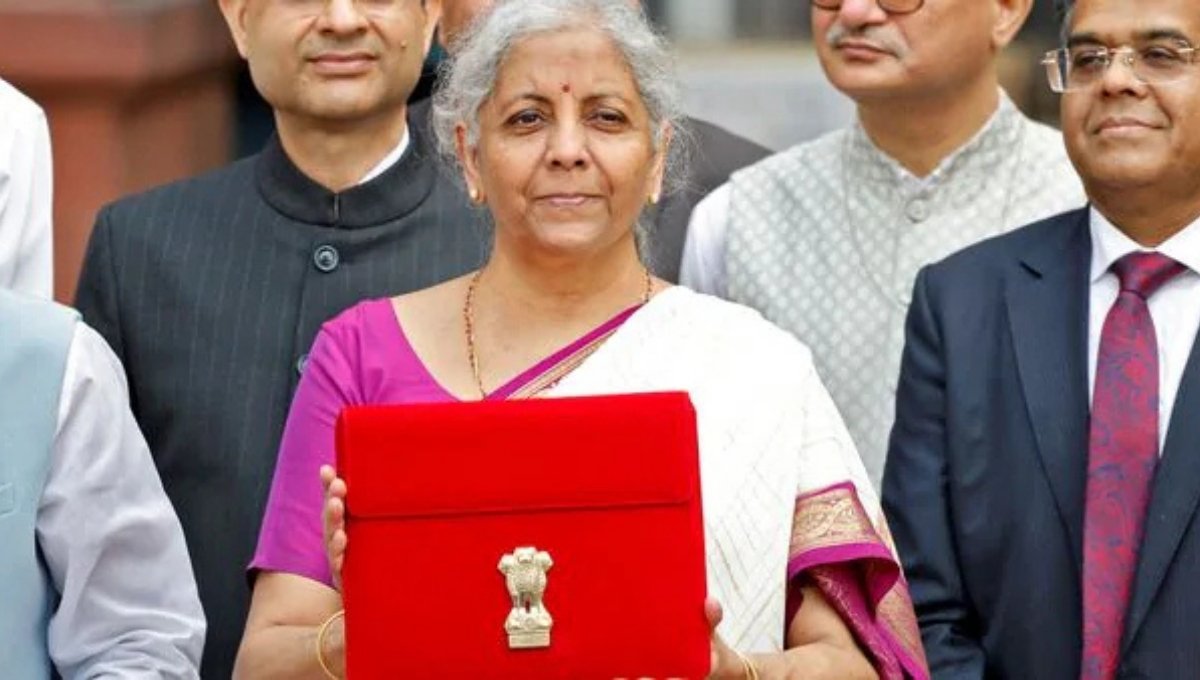
With just a few days until Budget 2026, the real estate industry is keeping a careful eye on every government signal. Both the cheap and premium property markets have shown consistent growth over the last two years. But investors’ and developers’ perspectives are changing dramatically. Long-term policy certainty has replaced short-term incentives as the main demand.
This year, a clear and trustworthy roadmap for capital gains, taxes, and the regulatory environment is anticipated rather than fresh subsidies.
Putting Capital Efficiency Above Short-Term Benefits
According to industry insiders, the Indian real estate market has matured to the point where regular “booster doses” are no longer necessary.

The sector’s contribution to India’s GDP is more important than ever, according to Amit Modi, Director of Country Group. He recommends that capital efficiency and regulatory predictability be given top priority in Budget 2026. This would greatly increase investor trust and enable developers to participate in long-term strategic planning.
Real Estate Expectations from Budget 2026
| Aspect | Key Highlights |
|---|---|
| Budget Focus | Shift from short-term subsidies to long-term policy stability |
| Industry Sentiment | Developers seek predictable tax rules and regulatory clarity |
| Luxury Housing | Strong demand in ₹2 crore+ segment driven by end-users and HNIs |
| Taxation Needs | Capital gains tax timeline clarity and indexation benefits |
| Affordable Housing | Redefinition of affordable housing limits in large cities |
| GST Expectations | Expansion of 1% GST benefit and lower GST on input services |
| Infrastructure Push | Higher PMAY allocation, metro, rail and logistics investment |
| Economic Impact | Job creation, investor confidence and sustainable growth |
| Global Outlook | Making Indian real estate more transparent and globally competitive |
| Overall Message | Stability and long-term reforms matter more than incentives |
Stability Over Price Sensitivity in the Luxury Market
The market for luxury homes, particularly those costing more than ₹2 crore, has proven remarkably resilient. It’s interesting to note that end users and High-Net-Worth Individuals (HNIs), who see real estate as a core long-term asset rather than merely a lifestyle enhancement, make up the bulk of buyers in this market.
Luxury buyers are quite sensitive to tax ambiguity, but they are often less sensitive to price changes. For this category, the most urgent issues are the reinstatement of indexation advantages and clarity regarding capital gains tax schedules.
The Significance of Predictable Capital Gains Regulations
Developers contend that investing in large-scale, design-led projects requires predictable capital gains regulations. Luxury property has a huge multiplier effect on the economy, according to BK Malagi, Vice Chairman of Experion Developers.

He claims that these initiatives help related industries like interior design, architecture, and speciality construction and create high-value jobs. Indian luxury real estate might become an internationally competitive investment destination by streamlining the capital gains system, drawing in more institutional and NRI capital.
Growth, Affordable Housing, and Urbanisation in Balance
The goal of “Housing for All” continues to be a crucial pillar even while luxury is flourishing. Budget 2026 would serve as a benchmark for the government’s urban development objectives, according to Siddharth Maurya, Founder & Managing Director of Vibhavangal Anukulakara Pvt. Ltd. Investors are awaiting the government’s response to the growing disparity in the affordable segment.
Important suggestions from the industry for this budget include
- Modifying the “affordable housing” price limitations to reflect the high cost of real estate in Tier-1 cities.
- Extending the 1% GST benefit’s eligibility.
- Lowering the overall cost of construction by lowering the GST on input services.
- PMAY funding has been increased, and regional and metro train development is still moving forward.
The real estate community has made it very evident that the sector is no longer in need of short-term rescue measures. It wants predictable tax regulations, a clear transaction environment, and a persistent drive for infrastructure in Budget 2026. How well the government executes its “stability first” strategy will determine the state of the housing market in 2026.
FAQs: Budget 2026 and Real Estate Sector
Q1. What is the real estate sector expecting from Budget 2026?
The real estate sector expects policy stability, clarity in taxation, rationalisation of capital gains rules and continued infrastructure investment rather than short-term subsidies.
Q2. Why is policy stability more important than subsidies for real estate now?
After two years of steady demand, developers believe stable and predictable policies help long-term planning, attract investors and support sustainable growth better than temporary incentives.
Q3. How can Budget 2026 impact luxury housing in India?
Clear capital gains timelines, indexation benefits and simplified transaction frameworks can boost investor confidence and help luxury housing emerge as a strong wealth-creation asset.
Q4. What changes are expected for affordable housing in Budget 2026?
Developers are seeking a redefinition of affordable housing price limits in large cities, expansion of the 1% GST benefit and higher allocations under housing schemes like PMAY.
Q5. Why is infrastructure spending crucial for real estate growth?
Investment in metro rail, regional transport, logistics and urban infrastructure improves connectivity, reduces project costs, creates jobs and strengthens long-term housing demand.
Also Read: Forgot Your PAN Card? How to Download PAN Card Online in Minutes