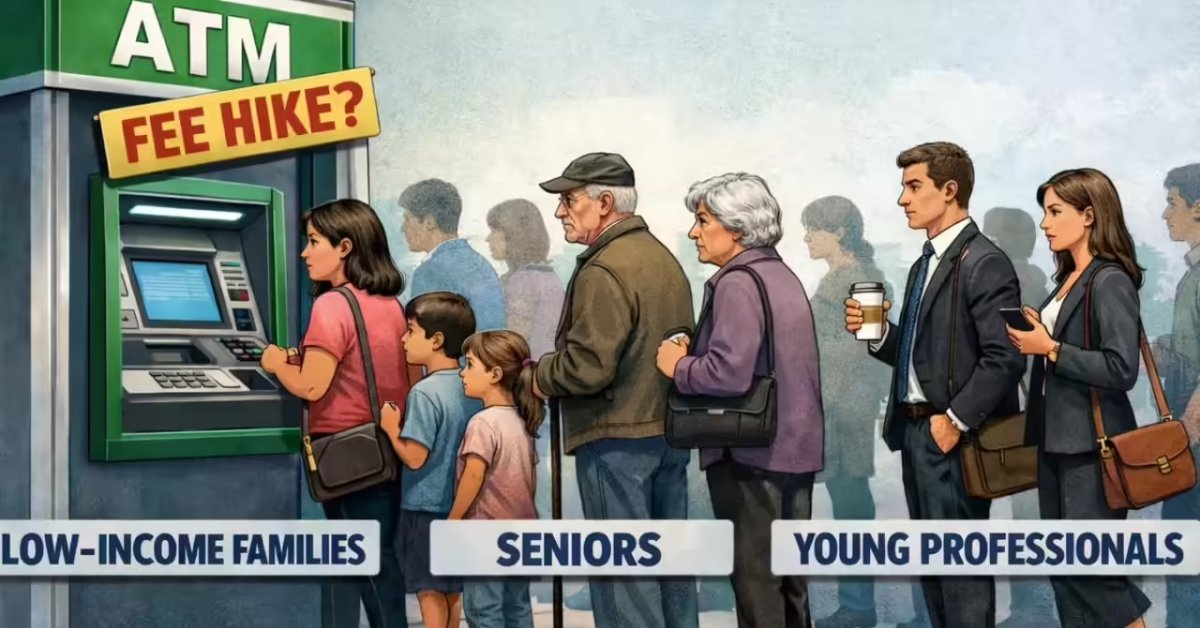
This revelation is crucial for State Bank of India customers who often take out cash from rival banks’ ATMs. Customers who frequently use ATMs would be directly impacted by the country’s largest public sector bank’s hike in non-SBI ATM withdrawal fees.
Cash withdrawals and certain other ATM services will cost extra after the new prices take effect. According to the bank, a rise in interchange costs prompted this move.
Why have SBI ATM fees gone up?
The interchange fee for ATMs and Automated Deposit/Withdrawal Machines (ADWMs) has gone up, according to SBI. The amount that one bank pays another bank to use its ATM is known as the interchange charge.
Customers are now immediately affected by this pricing rise. This obviously implies that transactions made at non-SBI ATMs after the designated limit will now cost more than they did previously.
Rules for Salary Account Holders Have Changed
Up till today, SBI salary account holders were able to use non-SBI ATMs for limitless free transactions. However, the new regulations have discontinued this facility.
Salary account customers will now only be able to complete ten free transactions each month. Both cash withdrawals and balance queries will be included in these ten transactions. The bank will impose a fee on each subsequent transaction after the limit has been exceeded.
What effect will this have on people who have savings accounts?
The quantity of free transactions available to holders of savings accounts has not changed. They can still use non-SBI ATMs to conduct five free transactions.
Nevertheless, the fee has been raised after going above the cap. Cash withdrawals beyond the limit will now cost ₹23 + GST instead of ₹21. There will be a fee of ₹11 + GST for balance inquiries or mini statements.
Which clients have benefited?
Customers with Basic Savings Bank Deposit Accounts (BSBDA) have good news. The new ATM fees do not apply to these account holders. They will continue to be subject to the previous regulations, and no new fees will be imposed. What effect will it have on your pocketbook?
This adjustment won’t have much of an effect on you if you only use ATMs a few times a month. However, this rise may eventually become a major financial burden for consumers who regularly take out cash from non-SBI ATMs. By using digital payments, UPI, and net banking more frequently, these extra fees can be avoided.
The rise in interchange costs is directly related to SBI’s decision to raise ATM fees. Customers with savings accounts will be responsible for paying the higher fees, even though a cap on free transactions has been placed on salary account holders. Customers should therefore carefully arrange their ATM transactions in order to avoid paying additional costs.
Also Read: 8th Pay Commission Update: Fitment Factor May Decide Big Salary Hike